
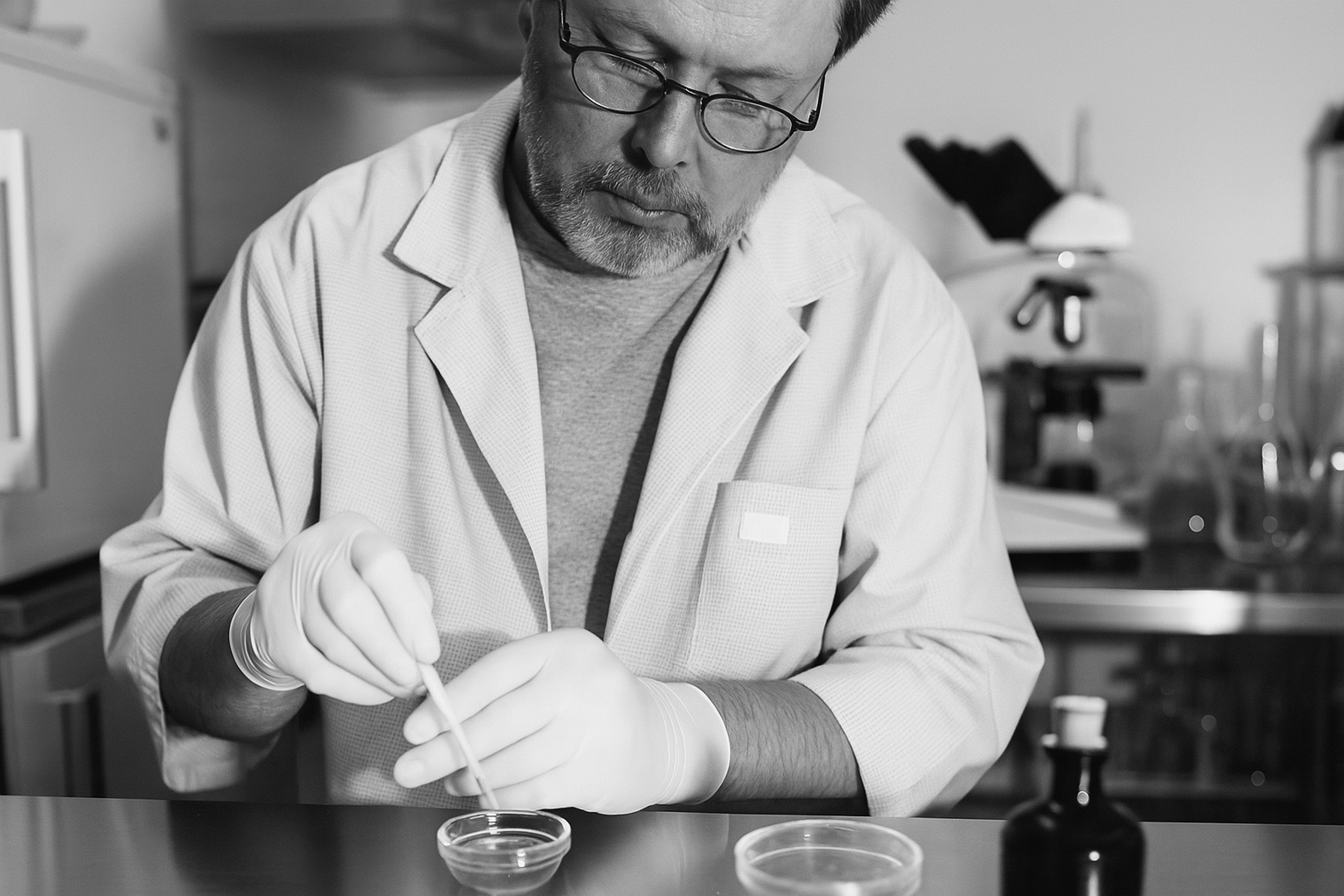
Over 50 years of Research
For more than five decades, our founder Sverre Paaske, has explored how the body absorbs, transforms, and benefits from nutrients. Inspired by traditional folk medicine and supported by scientific inquiry into herbs, microorganisms, and bioactive compounds. This lifelong research led to the creation of Medis, - a unique living mushroom culture developed to support optimal nutrient absorption.
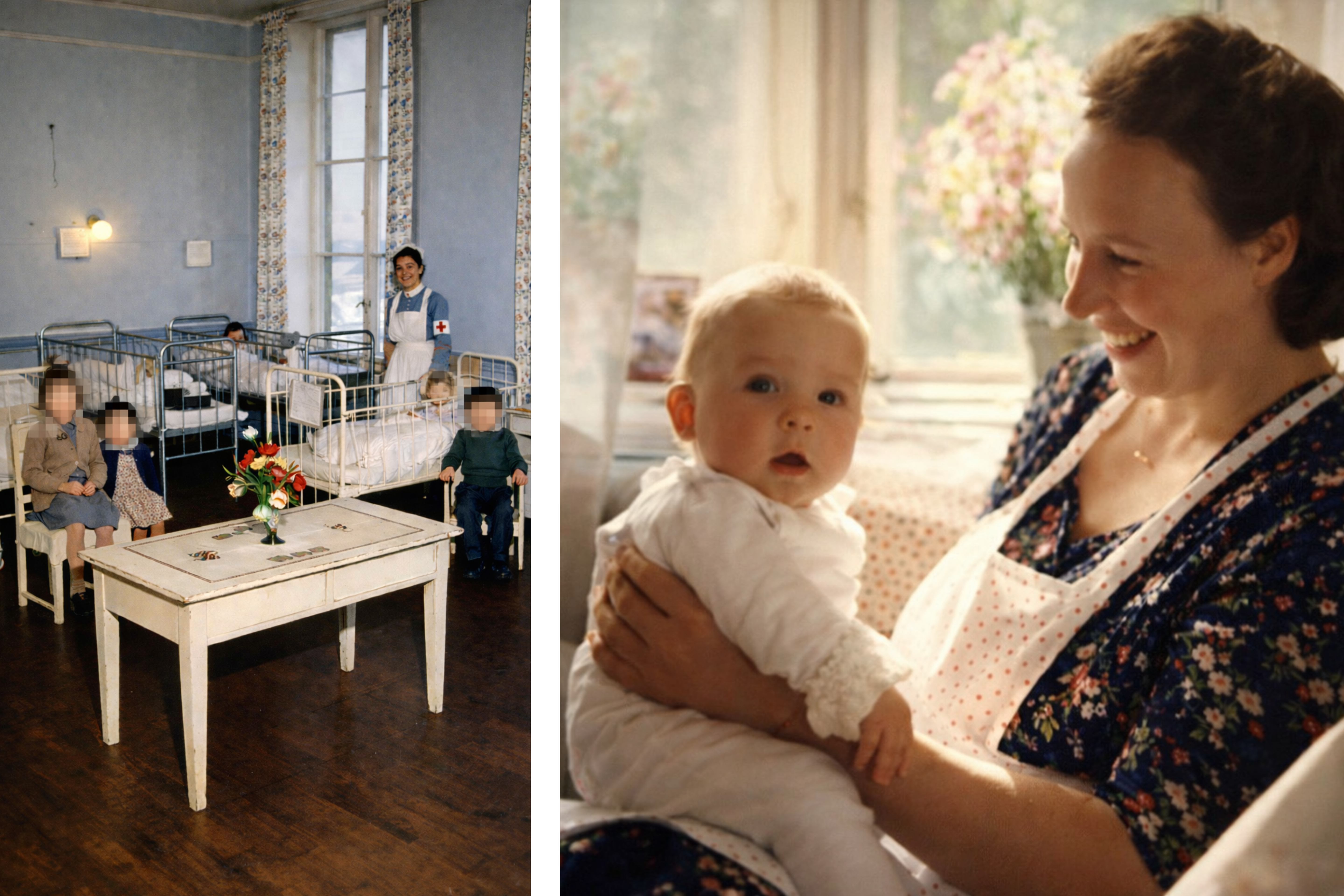
1947–1959
A Mother’s Wisdom
In her home in Oslo, Dr. Hilda Paaske, a devoted physician at Sophies Minde Hospital, began cultivating kombucha cultures. She offered them to children affected by polio, guided by her belief that nature could support the body’s healing process. Her dedication was not part of formal research, but born of compassion and deep medical intuition. Her early experiments would later inspire a whole new approach to health.
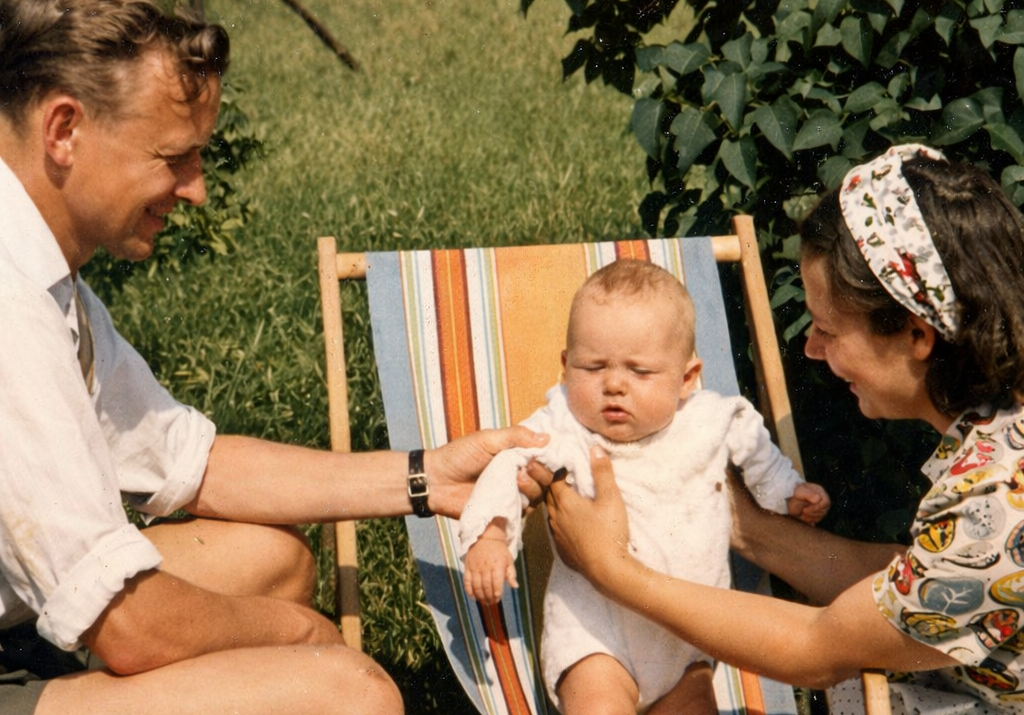
1950–1968
A Son’s Curiosity
Dr. Hilda Paaske’s home was filled with more than a hundred living kombucha cultures, quietly growing alongside her family. Her son, Sverre, born in 1950, spent much of his childhood by his mother’s side, often accompanying her to the hospital and growing up within its corridors as much as within their home. He enjoyed exceptional health, unaware that these early surroundings would later shape his life’s work.
When he began studying medicine in 1968, curiosity about his mother’s practices drew him beyond classical medicine and into complementary health, seeking to understand how natural systems could work with the body.
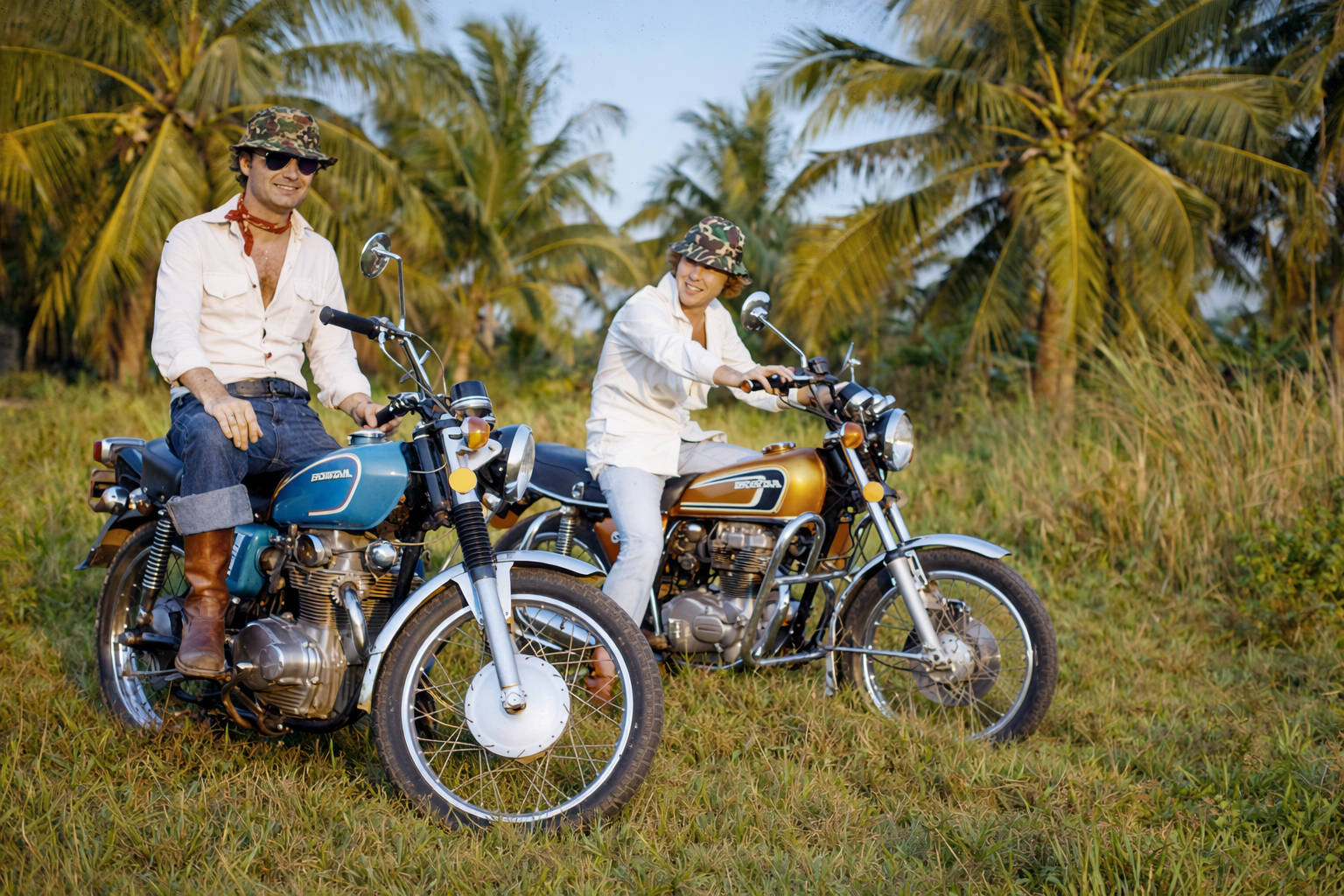
1972-1982
Discovering the power of Nature globally
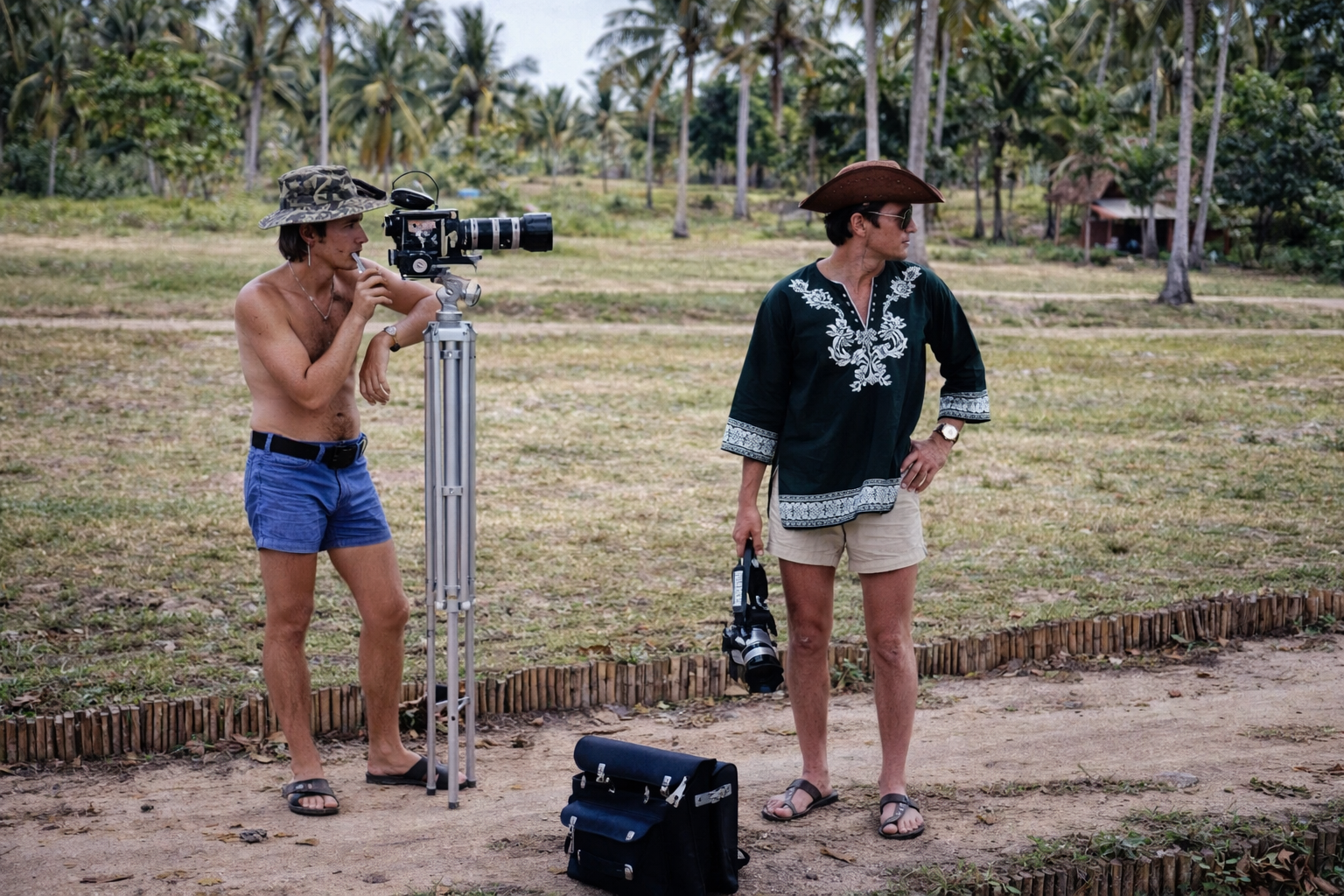
Throughout the 1970s and early 1980s, Sverre traveled across Asia, the Middle East, Africa, and Europe, collecting fungi and medicinal mushrooms. These were brought home and carefully systematised and documented before being gradually introduced into his mother’s kombucha cultures.
Sverre also deepened his understanding through formal training in European natural medicine, - apprenticing under herbal pioneer Alfred Vogel in Switzerland and completing a three-year education as a Heilpraktiker in Germany.
1976-1990
Integrating Medicinal Mushrooms in the culture
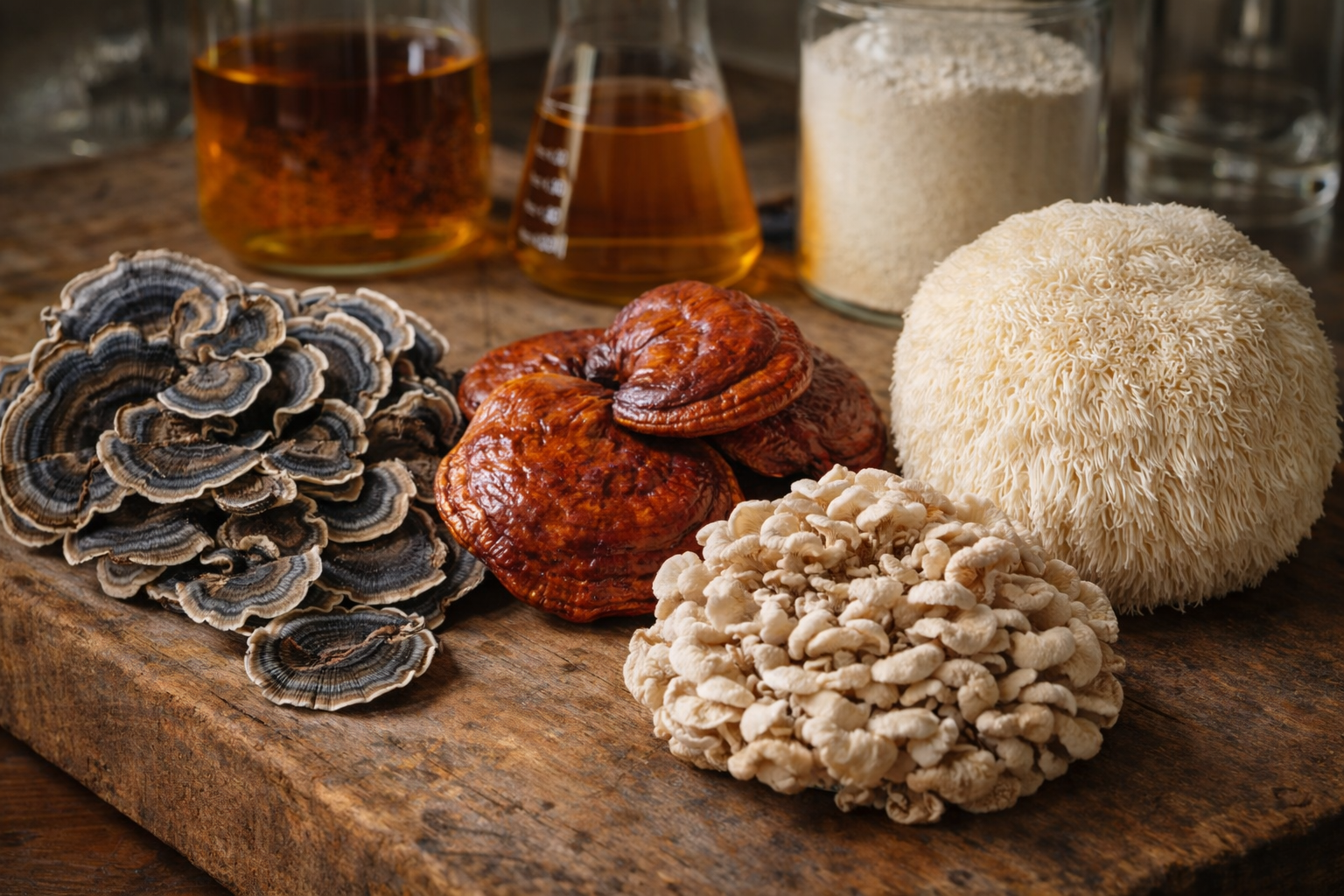
The next phase focused on developing the composition of the cultures through the careful introduction of medicinal mushrooms. During this process, sugar and black tea were phased out and replaced with nettle, which provided a more holistic and nutrient-rich foundation for the cultures. Both well-known and lesser-known mushroom species were used, including Turkey Tail, Reishi, Zhu Ling and Lion’s Mane. In 2014, Agaricus blazei Murill was added to the cultures, further expanding their functional profile.
1990–1995
From Recovery to Deeper Research
In 1990, a severe car accident resulting in 68 fractures led to four years of rehabilitation at Sunnaas Hospital. Rather than slowing his work, this period strengthened his scientific foundation, as he completed a degree in Biomedical Laboratory Science and later contributed to clinical and research work at several Scandinavian hospitals - further uniting biological science with natural medicine. Sverre worked extensively in biomedical analysis and research, contributing to clinical and scientific work at Karlstad Hospital, Karloniska Hospital, Ullevål University Hospital, and Akershus University Hospital (Ahus). His work spanned both laboratory diagnostics and research, strengthening the connection between conventional medicine and biological understanding.
1995-2002
A World Patent Granted!
Sverre etablerte Meditalklinikken i Oslo, København, Stockholm og Hamburg, hvor tusenvis av pasienter opplevde forbedret energi, motstandskraft og generell velvære.
I 1997 fikk kulturen navnet Medis - og solide vitenskapelige studier av medis-kulturen ble utført i samarbeid med Haukeland Universitetssykehus, Telelab i Skien og Deutsche Sammlung von Mikroorganismen und Zellkulturen (DSMZ). Denne forskningen styrket den vitenskapelige forståelsen av kulturens sammensetning, sikkerhet og biologiske aktivitet - og den vitenskapelige interessen vokste raskt etter hvert som forskere dokumenterte medisen's distinkte mikrobielle profil og uventede immunmodulerende effekter.
Denne forskningen endte i en patentsøknad, hvor Sverre Paaske i januar 2002 fikk innvilget et 20 års verdenspatent for sin produksjonsmetode av Medis.
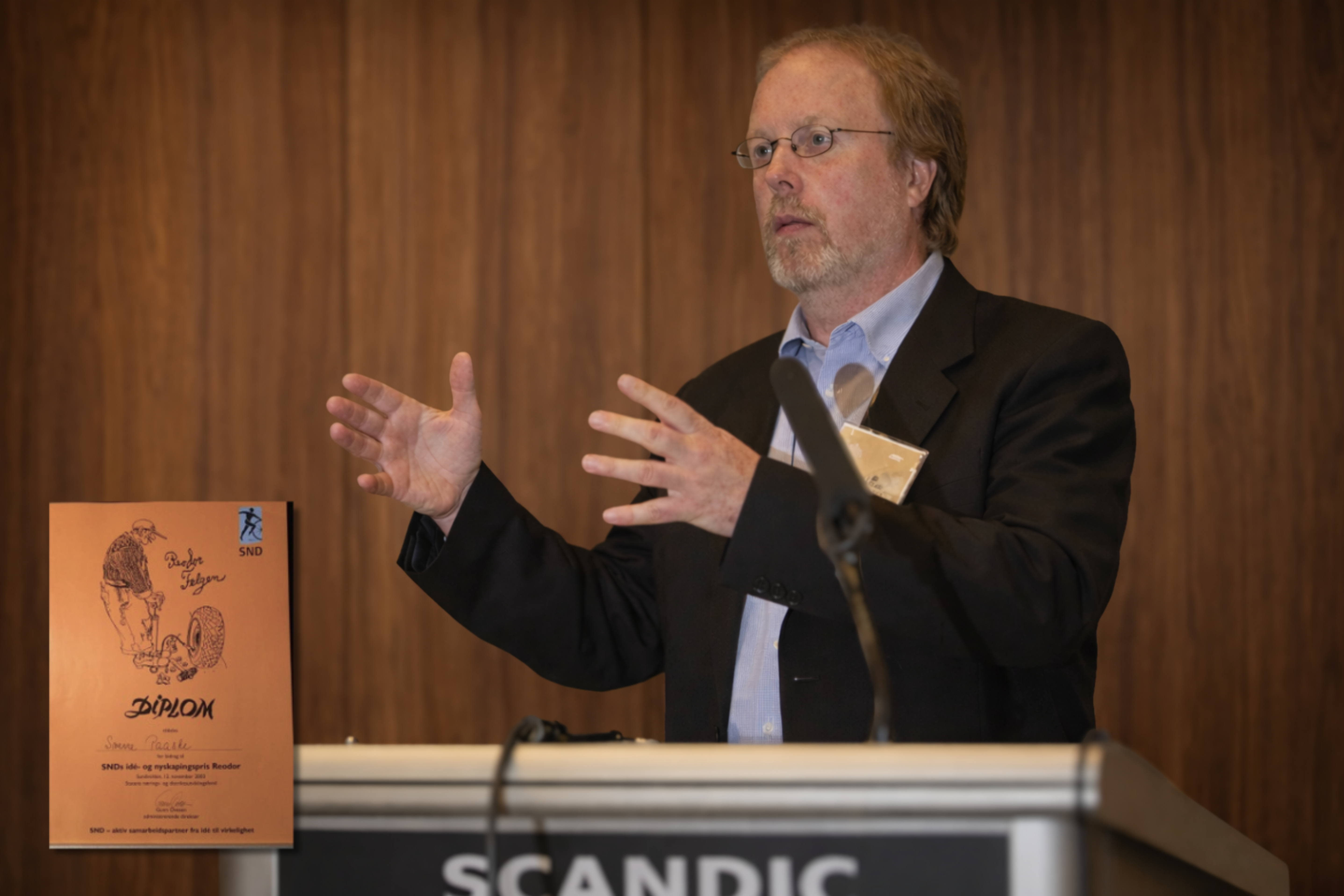
Senere samme år fikk Sverre også en formell anerkjennelse fra den norske regjeringen -Reodorprisen, for sin forskning og sitt patent.
2002-2012
From culture to Supplement
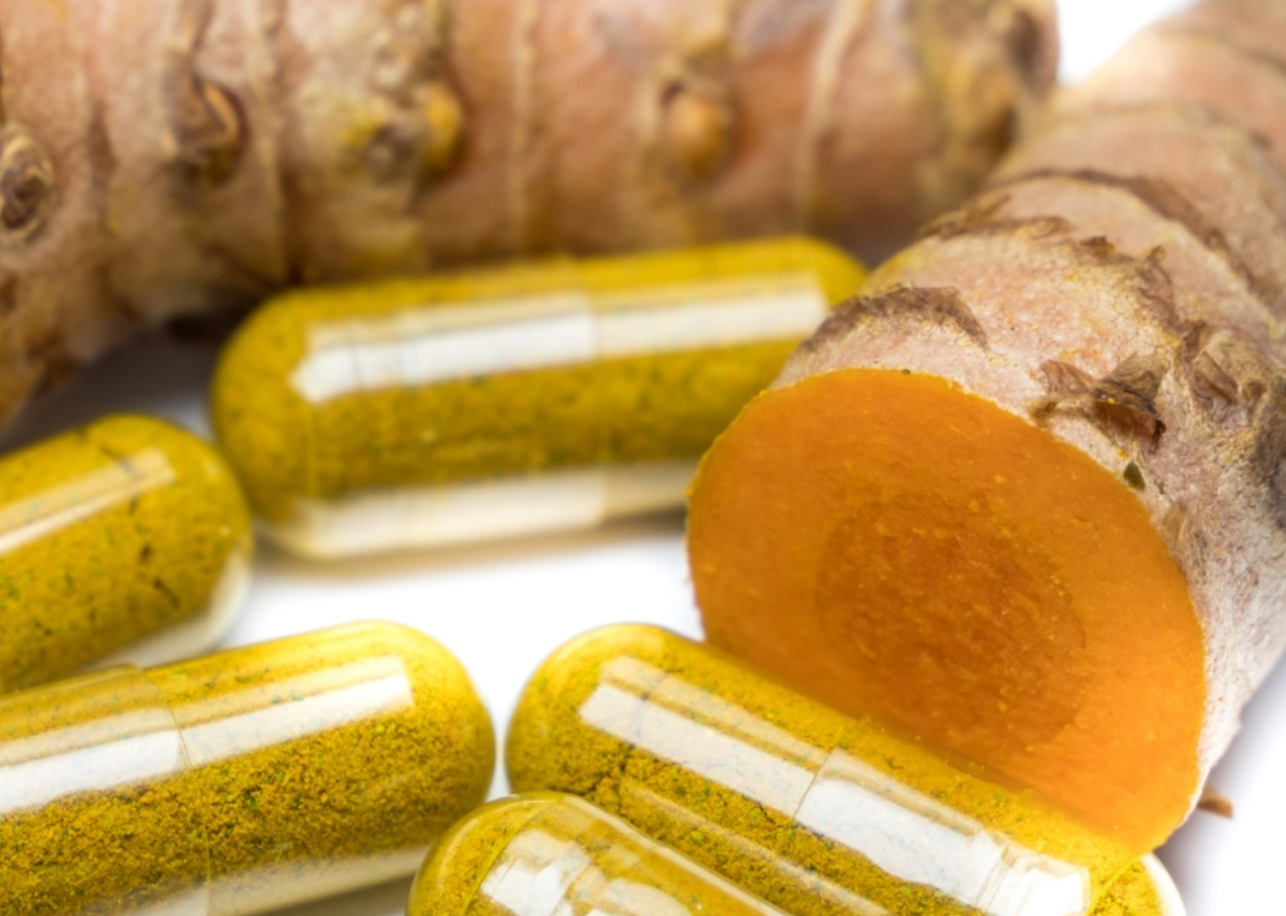
Sverre contributed to the development of several well-known supplements over the years, such as Vitapro, Vitabiosa, selected Herbaplus products, and Herbalife. He also created the original formulation for IM8. While these products have since been modified and further developed, his early work played a foundational role in their creation.
Medis raw material was produced at facilities in Norway, Germany, and Sweden. Using the Medis culture, Sverre developed his own supplements, and in 2001 the first Medis products were launched. They began with three formulations supporting heart health, digestion, and energy, and quickly gained traction across Europe.
2002-2012
Advancing the Medis Culture
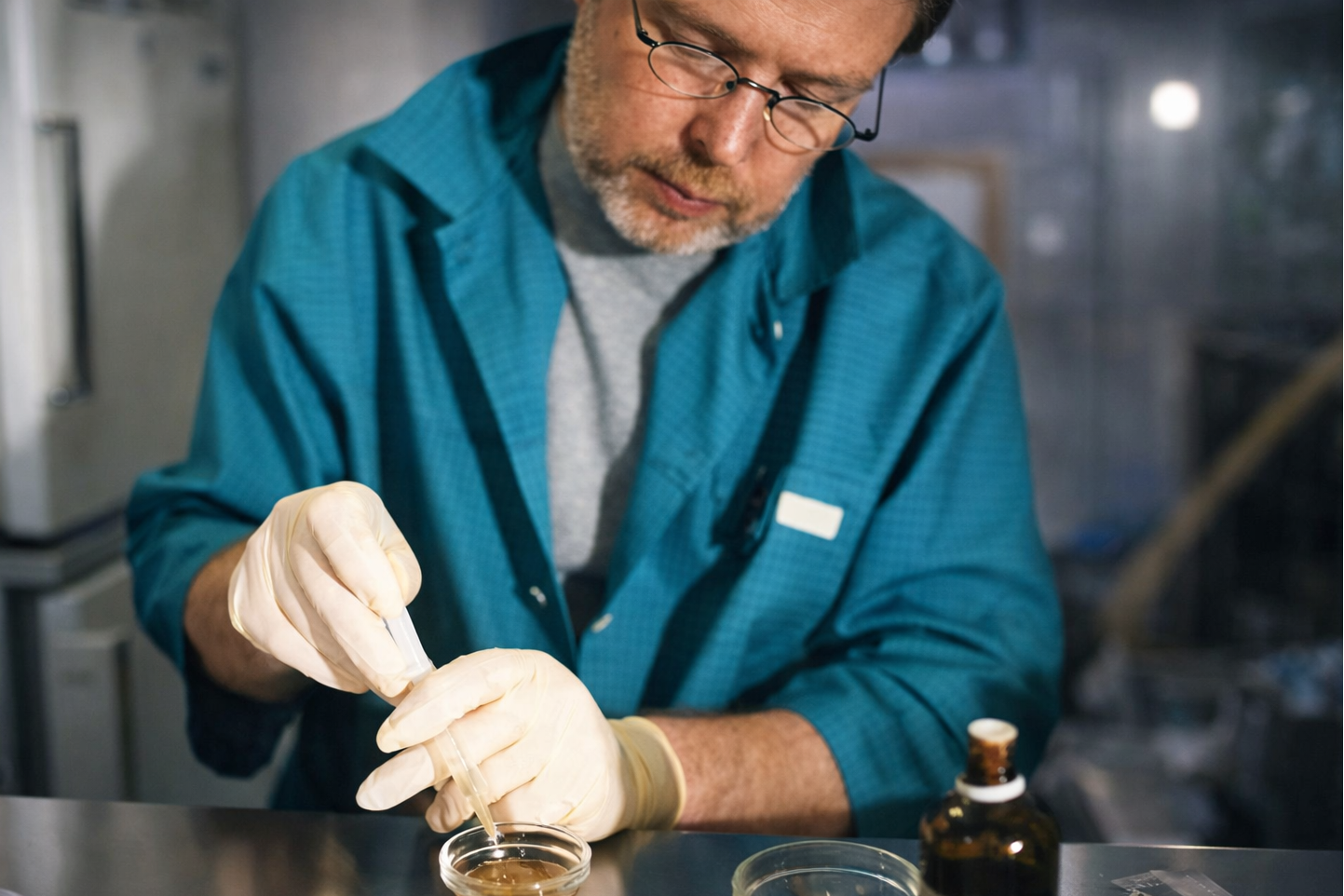
In 2012, Sverre received €1 million in research support from the European Union, enabling continued development through EU research resources, primarily in collaboration with Karolinska Hospital. The medis culture was further refined using ingredients from medicinal mushrooms, herbs, berries, and algae. Matured through months of natural fermentation, the liquid culture was then gently dried at room temperature into powder, - forming the foundation of the next generation of Medis supplements.
2012 - 2020
Medis AS Today
Medis AS forsker i dag på mediskulturen og dets innflytelse på ATP-produksjon, cellulær signalering, nevrotransmittere og mitokondrieaktivitet. Det som startet som en mors intuisjon i 1947 har blitt en langvarig vitenskapelig reise som forener tradisjon, biologi og innovasjon.